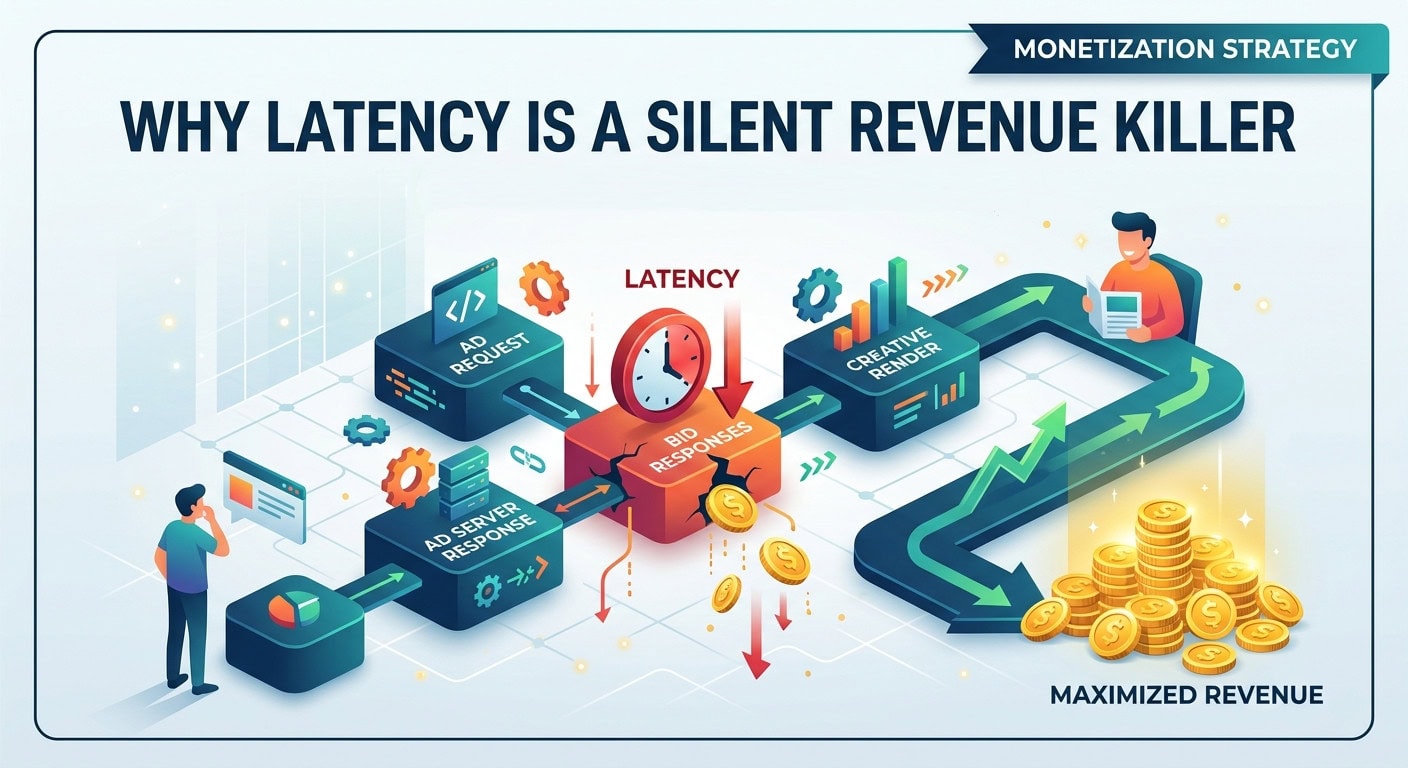
The Real Cost of Latency in Programmatic Advertising
In programmatic monetization, terms like floor prices, viewability, and fill rate are discussed constantly. What gets far less attention, however, is the factor quietly influencing all of these metrics behind the scenes – latency Latency, the time between an ad request being sent and the ad actually being rendered.
Latency does not appear as a separate line item in your revenue reports, which makes it even more dangerous. It does not behave like a sudden outage, but rather like a slow erosion of your inventory value. It quietly reduces fill rate, weakens the user experience (UX), decreases auction pressure, and ultimately lowers RPM.
In ad tech, latency covers the entire delivery chain: ad server response time, SSP/exchange response times, header bidding timeout, and the final creative rendering inside the browser. Every single step adds milliseconds — and today, milliseconds directly impact revenue.
Four Real Impacts of High Latency on Your Revenue
1. Loss of Auction Competition
If your timeout is too short, some demand partners simply do not respond in time. The auction runs with fewer bidders, competition weakens, and CPMs drop. If the timeout is too long, users lose patience and leave before the ad even loads. In both scenarios, effective CPM declines.
2. Lower Viewability
When ads load too slowly, users have often already scrolled past the placement. Technically, the impression is still counted as served, but in reality it is never viewable. Over time, DSPs begin penalizing your inventory for poor historical viewability, which further reduces bid density and pricing.
3. Reduced Fill Rate
High latency often leads to canceled auctions and unfilled requests. In reporting, this shows up as declining fill rate and a growing share of unfilled impressions. The issue is frequently not pricing strategy — it is a pure technical delivery problem.
4. Poor User Experience (UX)
Slow-loading ads create layout shifts, slow down the entire page, and increase bounce rate. The UX impact quickly creates secondary revenue problems: fewer pageviews, lower session duration, and ultimately fewer ad requests generated per user.
How to Reduce Latency Without Sacrificing Revenue
Latency optimization is not about reducing demand — it is about managing demand more efficiently. If you want a faster website without hurting monetization, focus on these areas:
- Audit Partner Response Performance: Analyze which SSPs consistently respond after timeout, have low win rates, or contribute minimal revenue share.
- Optimize Timeout Dynamically: Avoid relying on one fixed timeout value. Test different timeout configurations and measure their direct impact on RPM — not just fill rate.
- Implement Lazy Loading Properly: Ad slots should load only shortly before entering the viewport. Use preload buffers combined with viewability refresh logic. This reduces unnecessary auctions while significantly improving viewability.
- Reduce the Number of Ad Slots: Monitor metrics such as revenue per slot and viewability per slot.Removing weak, low-viewability placements often speeds up the page enough to increase auction pressure and RPM on the remaining inventory.
- Enforce Creative Performance Standards: Strictly limit heavy rich media formats and require compressed assets. Monitoring CLS (Cumulative Layout Shift) and render times should become part of your regular optimization workflow.
The Strategic Perspective: Latency vs. RPM
The most important question publishers should ask is not: „What timeout are we using?”But rather: „How does our latency impact overall RPM and user engagement?”
In practice, it is very common to reduce timeout by, for example, 300 ms and see fill rate decline slightly — while overall RPM actually increases. Why? Faster page loads improve viewability, enhance UX, and keep users engaged longer. Latency optimization is ultimately about finding the right balance between healthy bidder competition and overall page speed.